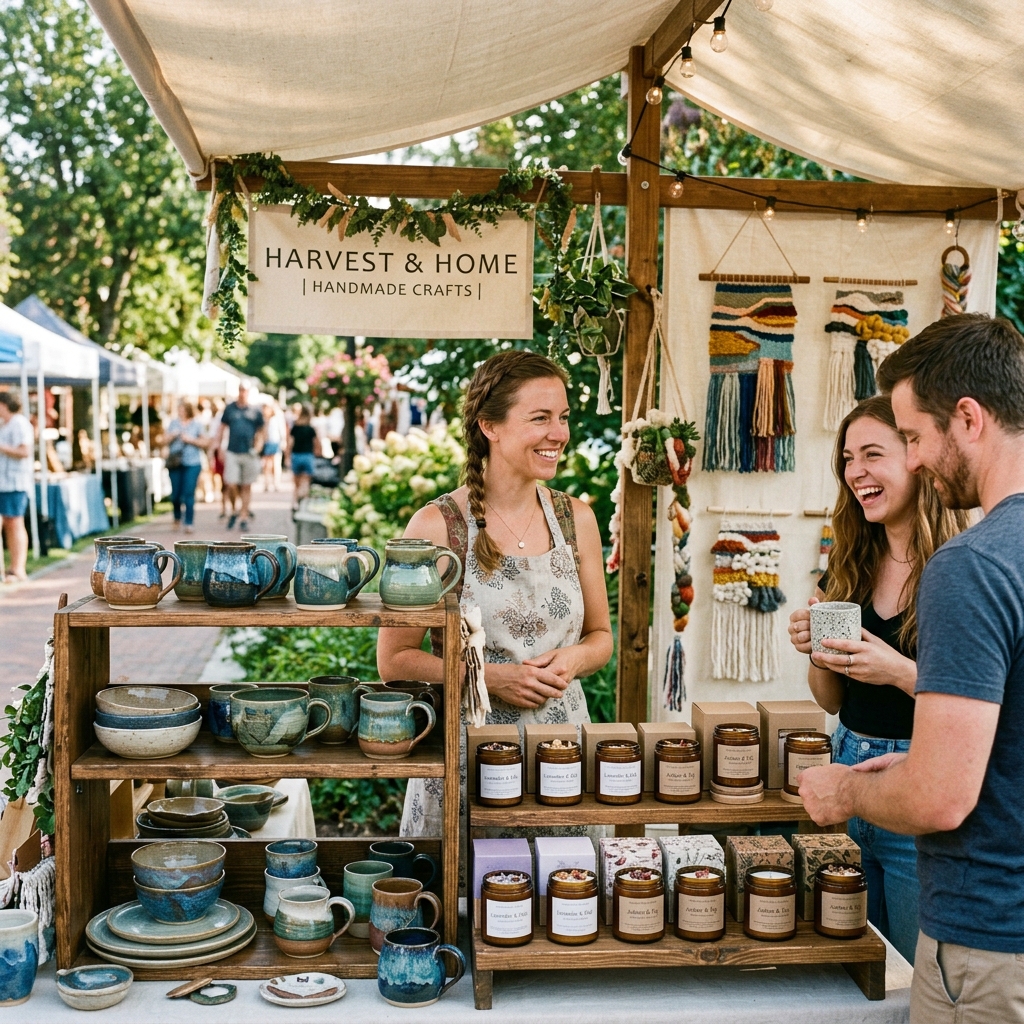
Selling at Craft Fairs vs. Online Marketplaces: The Artisan Profitability & Prep Guide
As an artisan or craft entrepreneur, choosing where to spend your energy and marketing dollars is one of the most critical decisions you will make.
Should you pack up your vehicle, set up a 10x10 canopy tent, and spend the weekend selling face-to-face at local artisan pop-up markets? Or should you focus 100% of your energy on building a 24/7 online storefront that reaches customers nationwide?
The short answer: Both channels offer distinct advantages, but the most profitable creators don't pick one over the other—they build a hybrid flywheel that connects both.
In this guide, we evaluate the financial realities of in-person craft shows vs. online storefronts, break down hidden overhead costs, and share a step-by-step checklist for your next pop-up event.
Comparison Matrix: Craft Fairs vs. Online Marketplaces
Before committing your inventory or booking fees, compare how these two channels stack up across key business metrics:
| Metric | In-Person Craft Fairs & Pop-Ups | Online Marketplaces & Storefronts |
|---|---|---|
| Upfront Costs | High ($50 – $500 booth fee + canopy, displays, travel). | Low ($0 – $30/mo subscription + listing fees). |
| Customer Feedback | Immediate. Watch shoppers touch, feel, and react to items in real-time. | Indirect (reviews, product page analytics, click-through rates). |
| Sales Conversion | High (10% – 30% of booth visitors buy on the spot). | Moderate (1% – 3% average e-commerce conversion rate). |
| Shipping & Packaging | Zero shipping costs or transit damage risks. | Must package, print labels, and handle carrier transit. |
| Geographic Reach | Local neighborhood radius (5 to 30 miles). | Global or nationwide. |
| Time Commitment | Intense weekend bursts (10–14 hours per day standing). |
Part 1: The Pros & Cons of In-Person Craft Fairs
There is nothing quite like the energy of a bustling weekend artisan market. For new makers, craft shows provide invaluable benefits that money cannot buy online.
The Major Advantages:
- Instant Market Validation: You get to observe real human behavior. You quickly learn which colors, scents, or sizes attract attention and which ones customers ignore.
- No Shipping Friction: Customers take their purchases home immediately in paper bags. You eliminate shipping costs, lost package claims, and transit breakage.
- High Impulse Buying: Physical touch triggers emotional connection. When a customer holds a warm ceramic mug or tests a hand lotion, conversion rates skyrocket.
- Local Community & Networking: You connect with fellow makers, local boutique owners looking for wholesale vendors, and repeat local fans.
The Hidden Costs & Drawbacks:
- Weather Vulnerability: Rain, wind, or extreme heat can devastate attendance at outdoor summer markets, leaving you with unpaid booth fees.
- Physical Fatigue: Transporting heavy display tables, tents, sandbags, and inventory boxes requires serious physical stamina.
- Upfront Financial Risk: If a market is poorly advertised by organizers, you may not make back your $200 booth fee.
Part 2: The Pros & Cons of Online Storefronts
An online store acts as your digital flagship location, open 24 hours a day, 365 days a year while you sleep or work in your studio.
The Major Advantages:
- Unbounded Scale & Reach: You are not limited by local city demographics. You can sell niche handmade items to buyers anywhere in the country.
- Lower Upfront Risk: Starting an online shop requires very little capital compared to purchasing physical display racks, POS hardware, and booth spaces.
- Reusable Content: Product photos, descriptions, and videos created once continue driving sales for months or years.
The Drawbacks:
- High Competition & Noise: Millions of products compete for attention. Without active SEO or marketing, your store can sit invisible.
- Shipping Logistics: Packing breakable items, purchasing shipping labels, and handling postal delays requires dedicated systems.
Part 3: The Hybrid Flywheel: How Top Artisans Win
Instead of choosing one channel, top creators use In-Person Craft Shows as Customer Acquisition Engines for their Online Store.
┌───────────────────────────────────────────────────────────┐
│              IN-PERSON CRAFT SHOW / POP-UP                 │
│  • High-touch personal connection                         │
│  • Customer tests/feels the handmade product              │
└─────────────────────────────┬─────────────────────────────┘
                              │
                              ▼
┌───────────────────────────────────────────────────────────┐
│               THE CONNECTOR (At Your Booth)               │
│  • QR code on table sign: "Get 10% Off Next Online Order" │
│  • Email sign-up sheet for giveaway drawing               │
└─────────────────────────────┬─────────────────────────────┘
                              │
                              ▼
┌───────────────────────────────────────────────────────────┐
│                ONLINE STORE / REPEAT CUSTOMER             │
│  • Customer orders holiday gifts online 3 months later     │
│  • Year-round subscriber lifetime value (LTV)             │
└───────────────────────────────────────────────────────────┘
3 Steps to Build the Hybrid System:
- Display a Big QR Code at Your Booth Table: Include a sign saying "Scan to Join Our VIP Club & Get 15% Off Your Next Online Order."
- Include Branded Package Inserts: Every paper bag you hand out at a craft fair should contain a business card or postcard featuring your online store URL and Instagram handle.
- Run a Booth Giveaway: Host an in-person raffle (e.g., win a $50 gift basket) where entering requires leaving an email address. This builds a high-intent email list for your online shop launches.
Part 4: The Ultimate Craft Fair Day-Of Checklist
Never arrive at a craft market unprepared. Bookmark this essential prep checklist before packing your vehicle:
Hardware & Payment Setup
- Mobile Card Reader (Square/Shopify POS) charged to 100%.
- Backup Portable Power Bank & charging cables.
- Cash Box with $100–$150 in small bill change ($1s, $5s, $10s).
- Smartphone with cellular data active.
Booth Display & Structure
- 10x10 Commercial Canopy Tent (White is standard for most curated shows).
- Heavy Canopy Weights: Minimum 20–30 lbs per tent leg (sandbags or water weights). Crucial for wind safety!
- 6 ft folding tables + floor-length table covers (hides extra inventory boxes underneath).
- Vertical display risers, wooden crates, or shelving (build height so products sit at eye level).
- Price tags clearly visible on every single item.
Operations & Emergency Kit
- Business cards, QR code table signs, email sign-up sheet.
- Shopping bags (kraft paper bags with stamped logo).
- Scissors, duct tape, zip ties, Sharpies, extra price stickers.
- Water bottle, healthy snacks, sunblock, comfortable walking shoes.
Frequently Asked Questions
How much cash change should I bring to a craft fair?
Bring at least $100 to $150 in small bills ($50 in $5s, $40 in $1s, $40 in $10s, plus a roll of quarters if pricing items with cents). Although 80%+ of customers pay via card or contactless tap, having exact change for cash buyers prevents lost sales early in the morning.
Do I need a business license or permit to sell at a local craft show?
Requirements vary by state and city. Most market organizers require vendors to hold a State Sales Tax Permit (to collect and remit local sales tax) and occasionally temporary event permits. Always check the event organizer's application guidelines 30 days before the event.
What is the average booth fee for artisan craft markets?
Local community or school craft fairs typically charge $35 to $75 per day. Curated regional artisan markets charge $150 to $350 for a weekend, while large national juried festivals can cost $500 to $1,200+.
Final Thoughts: Build Your Brand Everywhere
Whether you start by selling under a canopy tent at your local farmers market or by launching your online shop, the key to long-term success is building direct relationships with people who love your craft.
Ready to launch or expand your online storefront? Explore for more maker business guides and start sharing your handmade story today.