Creative Blueprints: How to Sell Sewing and Crochet Patterns Online
For years, physical craft sellers have struggled with the limits of their own time. You can only sew so many bags, knit so many sweaters, or throw so many pots in a day. Once your production capacity is maxed out, your business income hits a ceiling.
To bypass this limit, many successful creators are turning their design expertise into digital products by selling sewing patterns, crochet guides, and digital craft templates.
Selling patterns is the ultimate passive income model for makers. You design the item and write the instruction booklet once, and you can sell it thousands of times without shipping costs, inventory management, or materials overhead.
Here is how to format your patterns for success and sell them online without fees eroding your passive income.
1. Structuring a High-Quality Craft Pattern PDF
Shoppers expect your downloadable guide to be clear, professional, and easy to follow. A poorly written pattern leads to frustrated makers and bad reviews.
Ensure your digital PDF includes the following sections:
- Skill Level: Clearly label the difficulty level (e.g., Beginner, Advanced Beginner, Intermediate).
- Material Checklist: List the exact yarn weight, fabric yards, hook sizes, or needles needed to complete the project.
- Step-by-Step Instructions: Break down the process into logical steps. Write in clear, standard pattern abbreviations, but include a key explaining what those abbreviations mean.
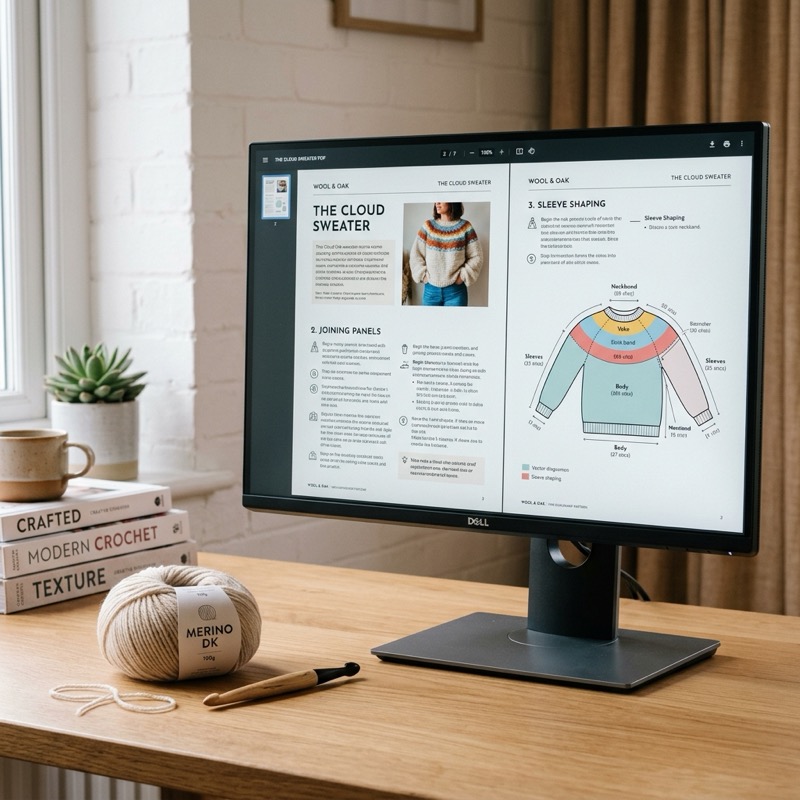
- Visual Checkpoints: Include high-resolution photos or illustrations of key steps. Showing what the work-in-progress looks like halfway through is incredibly reassuring for beginners.
- Printing Guides: For sewing patterns, include a "test square" (typically a 1-inch or 2-cm square) on the first page so customers can verify their home printer is scaling the pattern sheets correctly before cutting their fabric.
2. Testing Your Pattern Before Selling
Never publish a pattern without testing it first. Join online maker groups on Reddit, Ravelry, or Facebook and ask for "pattern testers."
Provide your draft PDF to a handful of testers in exchange for their honest feedback and photos of their finished items. Testers will point out typos, confusing instructions, or scaling errors that you might have missed.
Even better, they will generate photos of their finished projects in different colors and sizes, which you can use in your product listings to prove the pattern's versatility.
3. High-Quality Digital Product Listings
Since customers are buying a digital file, your listing photos must represent the finished physical product:
- Show the Finished Item: Use professional, well-lit photos of the finished garment, toy, or decoration. Make it look as attractive as possible.
- Show Sneak Peeks: Include a screenshot of one of the inner pages of your PDF showing your clear layout, photos, and step-by-step styling. This shows buyers that they are purchasing a premium, professionally designed guide.
- Use Clear Digital Badges: Add a small overlay badge to your main photo stating "Digital Download Only" or "PDF Pattern" so buyers do not mistake your listing for a physical item.
4. Maximizing Passive Income: The Fee Factor
Digital patterns typically sell for small transaction amounts, ranging from $3 to $8.
On traditional marketplaces, these micro-transactions are heavily penalized by listing fee structures. For example, legacy platforms charge a flat $0.20 listing fee that expires every 4 months or whenever an item sells.
If you sell a crochet pattern for $4, that $0.20 listing fee plus payment processing and transaction commissions can eat up 20% to 25% of your total sale. If your patterns sit in your catalog for months without selling, you continue to pay listing renewal fees, turning your passive income into a monthly expense.
At Wabbus, we support digital creators by offering 0% platform commissions and no listing fees. Your patterns can remain active in your catalog forever without costing you a cent. You keep the entire value of your digital work.
Learn how to set up instant digital delivery for your templates by checking our guide on .
By digitizing your creativity and utilizing a fee-free store, you can build a highly scalable, passive revenue stream that supports your craft business for years to come.