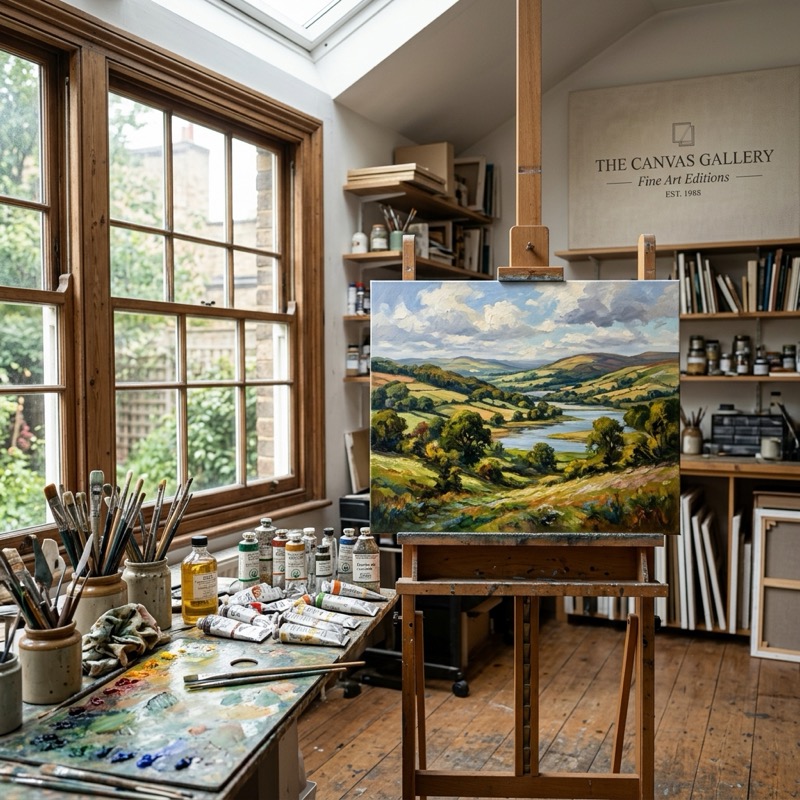
Canvas to Collector: How to Sell Original Fine Art and Prints Online
For centuries, the path to success for fine artists was controlled by brick-and-mortar art galleries. Galleries held the keys to collectors, decided which artists were represented, and took a massive cut—often 30% to 50% of the sale value—in exchange for displaying your work.
Today, the internet has democratized the art world. Independent painters, illustrators, and printmakers can bypass the gallery system entirely, selling original canvases and open-edition prints directly to collectors worldwide.
But selling fine art online requires a balance of visual presentation, secure packaging, and direct relationship building. Here is how to take control of your art career and sell your work independently.
1. Photographing Art: True-to-Life Color Accuracy
When a collector buys an original painting, they expect the colors on their wall to match what they saw on their screen. Inaccurate color representation is the leading cause of disputes for online art sales.
To capture your artwork accurately:
- Shoot Under Indirect Natural Light: Never use direct flash or warm indoor lighting, which distorts colors and creates glares on glossy varnishes or oil paint textures. Shoot outdoors on a bright, overcast day, or in a room with large windows facing north.
- Align Your Camera Parallel to the Canvas: Stand directly in front of the art, ensuring your camera sensor is perfectly parallel to the canvas plane. If your camera is tilted, it will distort the square shape of the painting (known as "keystoning").
- Provide Close-Up Brushstroke Details: Take macro photos of brushstroke textures, canvas edges, and your signature. Collectors want to see the physical hand-crafted details of original paintings.
2. Shipping Art Safely: Flat vs. Rolled
How you package your art depends on the medium and whether the canvas is stretched:
- Unstretched Canvases and Prints: The safest and cheapest way to ship paper prints or unstretched canvases is rolled inside a heavy-duty cardboard shipping tube. Wrap the artwork in acid-free glassine paper first to protect the paint layer from friction.
- Stretched Canvases and Framed Art: If the painting is stretched on wooden bars or framed, it must be shipped flat:
- Protect the Surface: Cover the front of the painting with glassine paper.
- Add Corner Guards: Place cardboard or foam corner protectors on all four corners of the frame or stretched canvas.
- Wrap in Bubble Wrap: Wrap the entire piece in multiple layers of large-cell bubble wrap.
- Sandwich in Cardboard: Place the wrapped painting between two sheets of thick corrugated cardboard, taping them together to create an inner rigid shield.
- Place in a Fitted Box: Insert the shielded painting into a heavy-duty cardboard shipping box. Fill any empty spaces with packing material so it cannot move.
3. Prints vs. Originals: Creating a Scalable Catalog
Selling original paintings is wonderful, but originals are one-of-a-kind and carry high price points. To make your art accessible to a wider audience and build a sustainable income, offer fine art prints (giclées):
- Limited Edition Prints: Print a set number of copies (e.g., 50 or 100), sign and number each print (e.g., 3/50), and include a Certificate of Authenticity. The scarcity of limited editions allows you to charge higher prices.
- Open Edition Prints: Sell prints indefinitely. While priced lower, open editions provide a steady, passive revenue stream since you can print them on demand as orders arrive.
4. Building Direct Collector Relationships
The biggest mistake artists make when selling on third-party platforms is letting the marketplace own the customer relationship. Traditional marketplaces block you from collecting customer email addresses and forbid you from directing buyers to your own website.
If the marketplace changes its ranking algorithm, your connection to your collectors is lost.
To build a resilient art business, you must own your audience. Gathering customer email contacts allows you to announce new studio collections and print releases directly.
To evaluate how vulnerable your art business is to platform algorithms, take our interactive and learn how to build direct-to-collector traffic independence.
At Wabbus, we support independent artists by offering 0% platform commissions and no listing fees. More importantly, we provide full access to your buyer list, enabling you to build direct, lifelong relationships with the collectors who love your art.
By combining color-accurate photography, secure shipping methods, and a direct-to-consumer sales platform, you can bypass the gallery gatekeepers and build a thriving, independent art career.