Heavy Shipping & High Margins: How to Sell Custom Furniture Online
Woodworking and custom furniture making represent some of the most skilled and high-value niches in the creator economy. Buyers are increasingly willing to pay a premium for solid wood dining tables, custom bookshelves, and hand-joined chairs that last for generations.
However, selling furniture online presents distinct logistical challenges. Unlike small crafts, furniture is heavy, bulky, and expensive to ship.
To run a profitable online furniture brand, you must design a secure packaging system, establish clear shipping partnerships, and choose a selling platform that does not penalize your high-value sales. Here is how.
1. Packaging Large Pieces: The Crate Standard
Standard cardboard boxes are not strong enough to protect heavy furniture during shipping. To prevent dented corners or broken table legs, you must construct custom wooden crates or use heavy-duty double-walled cardboard with wooden support frames.
Follow these packaging guidelines:
- Construct a Wooden Crate: For dining tables or heavy cabinets, build a simple crate using plywood and 2x4 lumber. Secure the furniture inside the crate using heavy-duty straps and foam bumpers so it cannot slide.
- Protect Edges and Corners: Furniture corners are highly vulnerable to impact. Wrap table legs and corners in thick foam protectors, and wrap the entire piece in multiple layers of moving blankets or heavy shrink wrap.
- Disassemble When Possible: To reduce shipping volume and protect delicate joints, design your furniture to be partially disassembled (such as detaching table legs). Provide clear instructions and the necessary hardware (screws, Allen keys) for the buyer to easily reassemble the piece at home.
2. Navigating Shipping Logistics: Freight vs. Ground
Understanding your shipping options is critical to pricing your furniture correctly:
- Standard Ground Shipping: If your packed item weighs under 150 lbs and fits within size limits (usually a combined length and girth under 165 inches), you can ship it via standard carriers like UPS or FedEx.
- LTL Freight (Less-Than-Truckload): For items weighing over 150 lbs or those that cannot fit in standard delivery vehicles (like fully assembled dining tables), you must use LTL freight carriers. Freight shipping requires placing your wooden crate on a pallet.
- White Glove Delivery: For very high-end pieces, consider white-glove shipping services. The carriers will deliver the item directly into the buyer's home, unpack it, and assemble it. While expensive, this premium service is highly valued by luxury furniture buyers.
3. Photographing Large-Scale Craftsmanship
Because furniture takes up a significant physical space in a home, buyers want to see how it fits into a room.
To showcase your work:
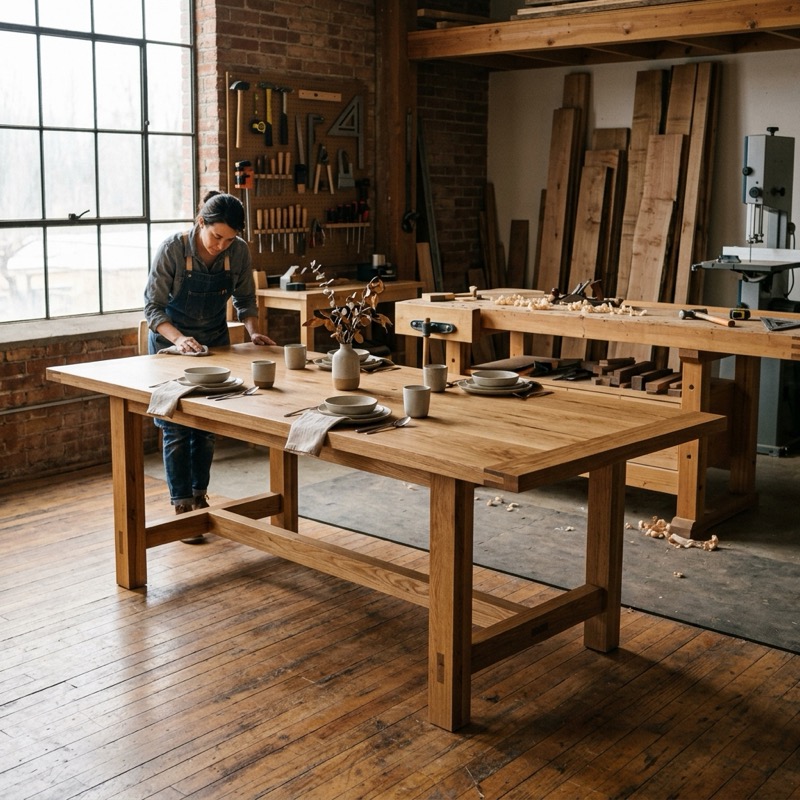
- Stage in a Room Layout: Do not just photograph your table in a messy workshop. Stage it in a clean, beautifully styled dining room or living room. Put a vase of flowers, plates, or books on top to give context and show scale.
- Show the Wood Grain: Take sharp, close-up photos of the wood grain, hand-cut joinery (like dovetails or mortise-and-tenon joints), and the finished underside. This proves the authenticity of your craftsmanship.
- Natural Lighting: Shoot in a room with large windows to let natural light showcase the rich tones of the wood stains and finishes. Avoid artificial overhead lighting, which can cause harsh glares and yellow tones.
4. Reclaiming Your High-Value Margins
Because custom furniture pieces sell for high prices (often ranging from $500 to $3,000+), commission-based platforms can be incredibly costly.
For example, traditional marketplaces charge transaction fees ranging from 6.5% to 15%. On a $2,000 dining table, that translates to $130 to $300 in transaction fees taken from a single sale. Even worse, many platforms charge their commissions on the shipping cost paid by the buyer—which, for LTL freight, can easily be an additional $300, costing you even more in platform fees!
At Wabbus, we support furniture makers by offering a 0% platform commission and no listing fees. You keep 100% of your sales value and freight allocations, ensuring that custom crating and shipping are fully covered by your profit margins.
Learn how to easily list your custom collections and scale your brand independently by checking out our guide on .
By mastering secure crating, partnering with the right carriers, and hosting your storefront on a fee-free platform, you can run a highly profitable and professional custom furniture business from your workshop.