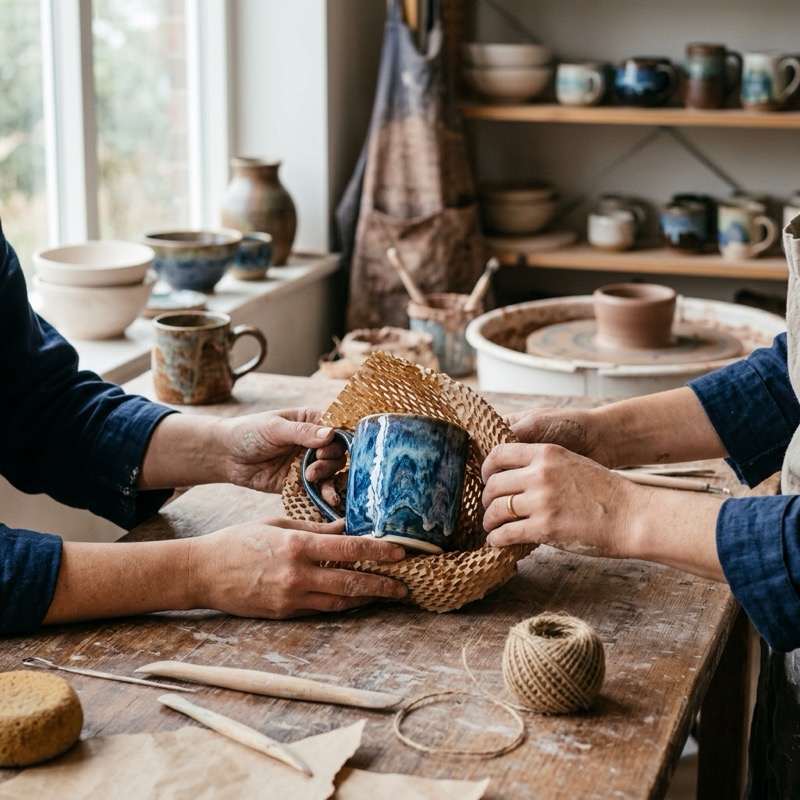
Fragile Cargo: How to Ship and Sell Ceramics Online Without Breakage
For potters and ceramic artists, there is nothing quite like the feeling of opening a kiln to reveal a fresh batch of glazed mugs, bowls, or vases. Each piece is a unique combination of clay, hand-shaping, and chemical alchemy.
However, once you decide to transition from local craft fairs to selling ceramics online, a new challenge arises: shipping.
Ceramics are heavy, delicate, and uniquely prone to fracturing under the rough handling of modern postal carriers. The fear of a customer opening a box only to find a pile of shattered clay prevents many talented potters from launching their online storefronts.
Fortunately, packing ceramics is a science. By mastering the double-box method and capturing your glaze details in photos, you can build a thriving, worry-free online ceramics brand. Here is how.
1. The Golden Rule of Shipping: The Double-Box Method
Single-boxing a ceramic piece with a layer of tissue paper is a recipe for heartbreak. To survive drops from sorting belts and bumpy delivery truck rides, you must use the Double-Box Method.
Here is the step-by-step packing process:
- Wrap the Item: Wrap your ceramic piece in several layers of honeycomb paper wrap or bubble wrap. Tape it securely so the wrap cannot slip off.
- The Inner Box: Place the wrapped item inside a small cardboard box. Fill any empty spaces around the piece with crinkle paper or crumpled kraft paper until the item cannot shift. Seal the inner box with heavy-duty packing tape.
- The Shake Test: Give the inner box a gentle shake. If you hear anything moving or sliding inside, add more packing material. It must be completely immobile.
- The Outer Box: Select a second, larger box that leaves at least 2 inches of space on all sides of the inner box. Place a 2-inch layer of packing peanuts, crumpled paper, or bubble wrap at the bottom.
- Nest and Seal: Place the inner box inside the outer box. Fill the surrounding 2-inch gaps on all sides and the top with more packing material. Seal the outer box securely.
This double-box system creates a buffer zone. Any impact on the outer box is absorbed by the packing material before it can reach the inner box containing your delicate art.
2. Photographing Glaze Reflections and Textures
Pottery is highly tactile. Buyers want to understand the texture of raw clay compared to glassy glazes, the depth of speckled details, and the actual shape of the piece.
To capture these details:
- Avoid Direct Flash: Direct camera flash creates harsh white glare spots on glossy glazes, masking the actual glaze color. Instead, use soft, indirect natural light (such as a shaded outdoor area or a room with large windows).
- Show Close-Up Textures: Take macro shots showing the bottom rim (where the raw clay is often exposed), the thickness of the rim, and the inside of the vessel.
- Show Scale: Photograph your ceramics next to familiar items (like a hand holding a mug, or a plant sitting inside a vase) so buyers immediately grasp the physical size.
3. Calculating Shipping and Weight Correctly
Because clay is heavy, shipping costs can escalate quickly. Guessing your shipping fees will result in either overcharging customers (which kills sales) or undercharging (which eats your profits).
Before listing your ceramics online, invest in a digital shipping scale. Weigh your finished ceramic pieces inside their fully packed double-boxes to determine the exact shipping weight.
To help you organize these logistics, we have integrated shipping margin tools into our comprehensive . This checklist guides you through setting up shipping profiles, preparing product photos, and completing the legal registrations required to sell from home.
4. Launching with Zero Transaction Overhead
When your product is heavy, shipping fees make up a large portion of the buyer's total checkout price. Traditional marketplaces charge their transaction commissions on the total transaction value—which includes the shipping fees paid by the buyer!
This means you end up paying commission fees on the postage itself, which can severely damage your profit margins.
At Wabbus, we support ceramic artists by offering a 0% platform commission and no listing fees. You keep every dollar of your product sales and shipping allocations, ensuring that double-boxing and safe packing are fully funded by your margins.
By implementing safe packing standards and utilizing a fee-free store, you can ship your pottery worldwide with complete peace of mind.