The Ultimate Care Guide for Handmade Ceramics & Pottery: Dishwasher, Microwave & Cleaning Tips
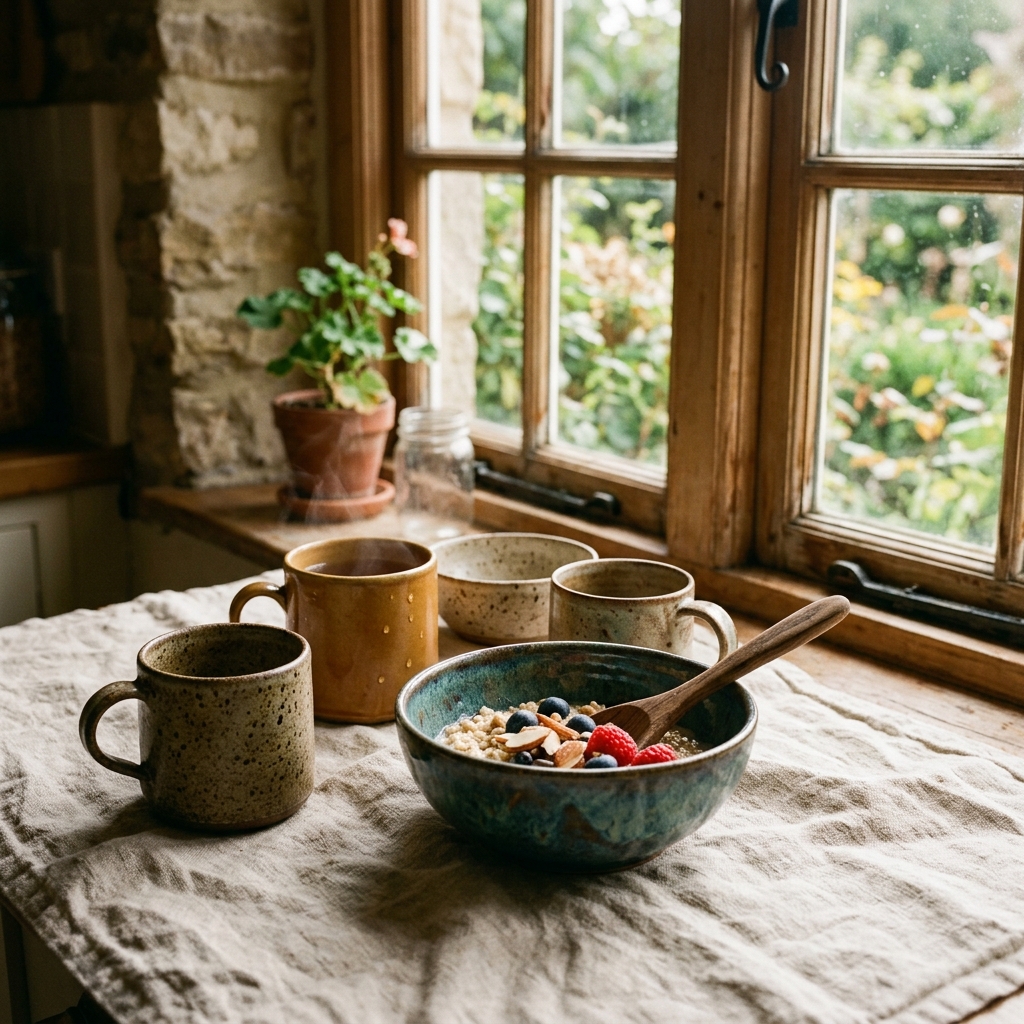
There is something deeply satisfying about drinking morning coffee from a handmade ceramic mug. The organic weight, tactile glaze textures, and thumb-rests shaped by an artisan's hands make everyday routines feel like a ritual.
Unlike mass-produced factory tableware made from uniform industrial slip casting, handcrafted pottery possesses unique structural characteristics. Depending on the clay body (stoneware, porcelain, or earthenware), firing temperature, and glaze formula, your favorite artisan mug requires slightly different care to last a lifetime.
Whether you just acquired your first wheel-thrown piece or want to care for a growing pottery collection, this guide covers everything you need to know about dishwashers, microwaves, thermal shock, and stain removal.
Quick Reference: Appliance & Care Compatibility Matrix
Before putting your handcrafted pottery in the dishwasher or microwave, consult this quick safety guide based on ceramic finish and clay type:
| Ceramic Finish / Clay Type | Dishwasher Safe? | Microwave Safe? | Oven Safe? | Thermal Shock Risk |
|---|---|---|---|---|
| High-Fired Stoneware (Gloss Glaze) | Yes (Top rack recommended) | Yes (Check for hot handles) | Yes (Cold oven start only) | Low to Moderate |
| Porcelain (Clear / Color Glaze) | Yes | Yes | Yes (Gradual heat only) | Low |
| Gold / Platinum Luster Accents | NO (Hand-wash only) | NO (Metal sparks in microwave) | NO | High |
| Matte / Satin Glaze | Yes (Hand-washing prevents cutlery marks) |
1. Is Handmade Pottery Dishwasher Safe?
Most modern studio potters fire their stoneware and porcelain to Cone 5 or Cone 6 (around 2,165°F to 2,232°F), which vitrifies the clay into a non-porous, waterproof state.
Best practices for dishwasher use:
- Use the top rack: The bottom rack sits closer to heavy heating elements. Placing handmade ceramics on the top rack prevents sudden thermal spikes.
- Space items apart: Prevent ceramic mugs and bowls from clinking against glassware or heavy pots during high-vibration rinse cycles. Chipping occurs when items knock together, not from water pressure.
- Hand-wash delicate or heirloom pieces: If a mug features delicate handles, sculptural attachments, or luster accents, gentle hand-washing with mild dish soap and a soft sponge is always safest.
2. Can You Microwave Handmade Ceramic Mugs?
In general, high-fired stoneware and porcelain are microwave safe. However, there are two important exceptions to watch out for:
⚠️ Exception 1: Gold, Silver, or Metallic Luster Highlights
If your pottery has shimmering gold leaf rims, silver accents, or metallic luster details, NEVER place it in a microwave. Metallic glazes contain real metal particles that will spark, arc, and permanently burn the decorative luster.
⚠️ Exception 2: Moisture Absorbed in Unglazed Foot Rings
Have you ever microwaved a mug for 60 seconds and found the handle burning hot while the liquid inside was still lukewarm?
This happens when the bottom unglazed rim (the "foot ring") absorbs tiny amounts of water during washing. When microwaved, the trapped water molecules heat up rapidly inside the ceramic body.
Solution: Allow your handmade mugs to air-dry upside down on a dish rack before storing them in cabinets so the unglazed bottom dries completely.
3. How to Prevent Thermal Shock (The #1 Cause of Cracked Pottery)
Thermal shock happens when ceramic material expands or contracts too rapidly due to sudden temperature swings. Even the strongest high-fired stoneware can crack or snap in half if subjected to extreme thermal shifts.
Golden rules to avoid thermal shock:
- ❌ NEVER pour boiling water into a freezing cold mug. If your studio or kitchen is cold in winter, warm your ceramic mug with hot tap water first before pouring boiling tea or coffee.
- ❌ NEVER transfer ceramics directly from the refrigerator to a preheated oven. Always place cold ceramic bakeware into a cold oven, then turn the oven on so the pottery heats up gradually alongside the oven.
- ❌ NEVER place a hot ceramic baking dish onto a cold granite countertop or wet towel. Set hot bakeware onto a wooden trivet or dry pot holder.
4. How to Remove Tea & Coffee Stains Naturally
Over time, tannins from dark roast coffee and black tea can leave stubborn brownish rings on light-colored satin or matte glazes. Avoid using abrasive steel wool or harsh chemical bleach, which can scratch the glaze surface.
Natural 2-Minute Cleaning Method:
- Sprinkle 1 tablespoon of baking soda directly into the stained mug.
- Add 1 teaspoon of warm water to form a thick paste.
- Gently scrub the stained area with a soft sponge or cloth in circular motions. Baking soda acts as a mild, non-abrasive polish that lifts tannin stains instantly without scratching.
- Rinse thoroughly with warm water.
5. Caring for Unglazed & Matte Surfaces
Matte glazes and raw, unglazed clay surfaces (like the bottom exterior of speckled stoneware) have a tactile, earthy feel. Because matte surfaces have microscopic texture:
- Metal Cutlery Marks: Stainless steel knives or spoons can leave gray scuff marks on matte white glazes. These are metal deposits, not scratches. Remove them easily using a dab of Bar Keepers Friend or baking soda paste.
- Drying Unglazed Clay: Always let raw clay bottoms air-dry completely in a well-ventilated area before stacking or storing to prevent moisture entrapment.
Frequently Asked Questions
Why does my handmade mug get extremely hot in the microwave?
If the clay body is low-fired earthenware or has absorbed moisture through an unglazed foot ring, the water inside the clay heats up rapidly in the microwave. High-fired, fully vitrified stoneware with a dry foot ring remains cooler to the touch.
How do I fix tiny hairline cracks (crazing) in ceramic glaze?
Crazing appears as spiderweb hairline lines beneath the glaze surface, caused by a slight expansion mismatch between clay and glaze. While crazed pottery remains structurally sound, avoid using crazed pieces for liquid food storage if the underlying clay body is porous earthenware.
Can you put handmade ceramic baking dishes in the oven?
Yes, provided the maker specifies the piece is oven-safe. Always place the ceramic dish in a cold oven and let it warm up gradually. Avoid broiling or heating above 400°F unless certified by the artisan potter.
Enjoy Your Artisan Collection for Years to Come
Handcrafted ceramics bring warmth, soul, and art into daily life. With a little care—avoiding thermal shock, drying foot rings, and hand-washing gold lusters—your favorite pottery pieces will remain beautiful heirlooms for generations.
Discover unique wheel-turned mugs, ceramic bowls, and handcrafted kitchenware from independent artisans on .