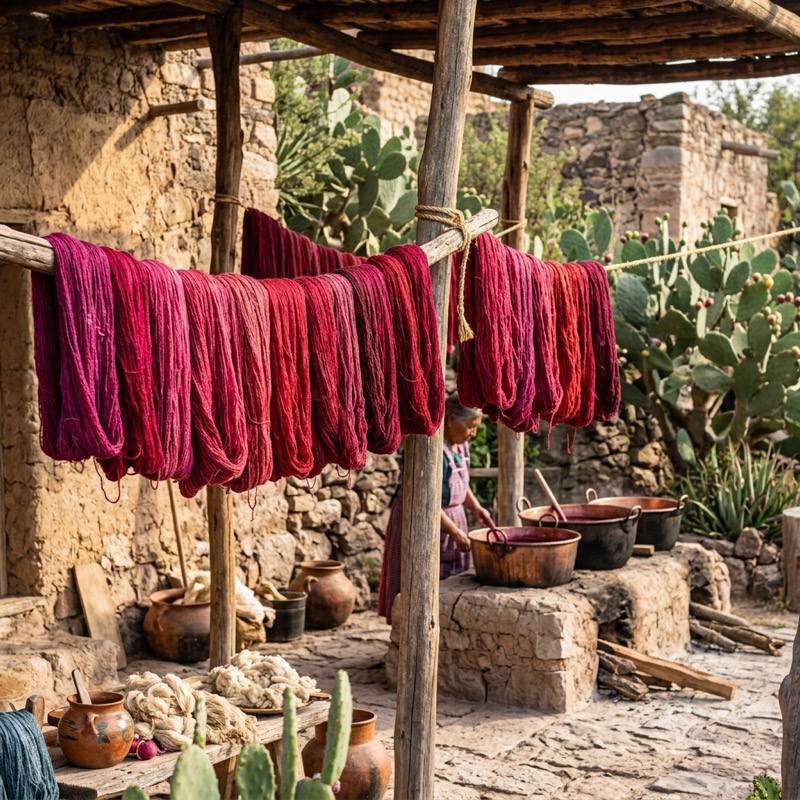
The Crimson Trail: The History of Cochineal & Natural Textile Dyeing
Deep in the valleys of Oaxaca, Mexico, a vibrant red has stained the history of art for thousands of years. Long before synthetic dyes filled our clothes with chemical hues, Zapotec weavers were producing a red so rich and colorfast that it became one of the most valuable commodities in the Spanish Empire.
This color is not made from plants, minerals, or chemicals. It comes from a tiny insect: the cochineal (Dactylopius coccus).
Today, as the world searches for sustainable alternatives to fast fashion and toxic synthetic dyes, independent artisans are returning to this ancient technique, proving that heritage craft and ecological responsibility go hand-in-hand.
The Science and Craft of the Cochineal Bug
Cochineal insects live on the pads of prickly pear cacti (Opuntia). The female insects produce carminic acid to deter predators. When harvested, dried, and crushed, they release a brilliant crimson pigment.
But natural dyeing is not as simple as dropping wool into red water. It is a highly skilled chemical process:
- Harvesting: Hundreds of thousands of tiny insects must be brushed off cactus pads by hand.
- Drying: The insects are dried in the sun, turning into silver-gray grains.
- Mordanting: To make the dye bind permanently to the wool, the wool must first be boiled with a mineral mordant (like alum).
- The Magic of pH: By adding natural acids (like lime juice) or bases (like wood ash) to the dye bath, weavers can shift the color from bright orange-red to deep purple, magenta, or scarlet.
Why Natural Dyeing is Worth the Labor
Synthetic dyes are cheap and fast, but they carry a heavy environmental cost, polluting rivers and exposing workers to heavy metals. Natural cochineal dyeing is completely biodegradable, organic, and safe for the soil.
Because each dye bath is affected by the soil the cactus grew in, the minerals in the water, and the temperature of the air, no two dye batches are exactly identical. Every hand-woven rug is a unique piece of living history.
This level of detail requires dozens of hours of intense physical labor and generations of inherited knowledge. For independent weavers trying to build a sustainable business, pricing these custom pieces is critical. In our pricing guide, we break down to ensure your labor is never valued at zero.
Supporting Independent Textile Artists
At Wabbus, we support makers who preserve traditional crafts and protect the ecosystems they rely on. Many of our textile sellers collaborate with local farms to source organic wool and natural dyes.
For creators doing the hard work of natural textile production, high marketplace fees can eat up their entire profit margin. If you are selling handmade textiles, check out our guide on and see how Wabbus's 0% platform commission helps you keep the fruits of your labor.
Explore the hand-woven works of our independent makers by searching for and support sustainable craftsmanship.